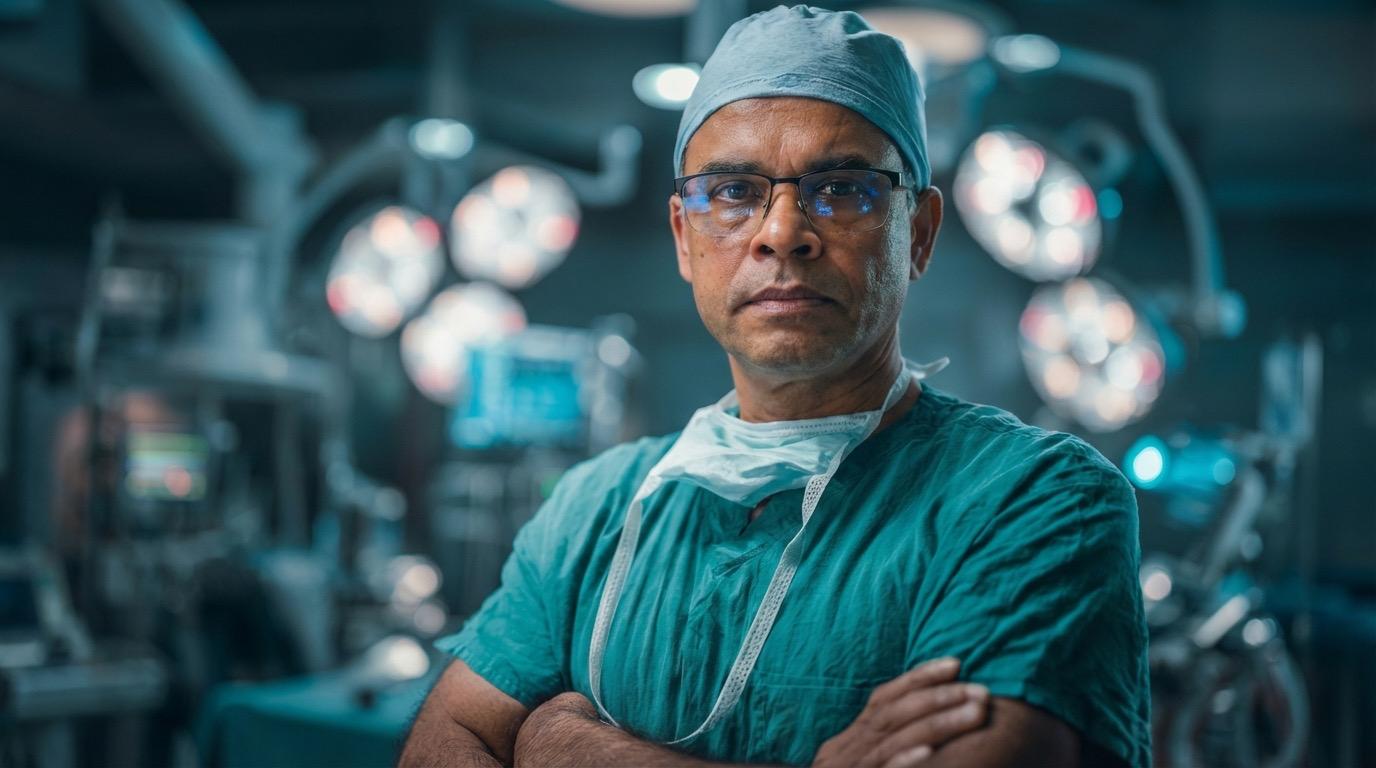
Laparoscopic Surgery in Surrey
Expert care from Mr Sumit Kar, FRCOG, MRCOG, MD (Obs & Gynae), MBBS
Laparoscopic surgery, also known as keyhole surgery or minimally invasive surgery, is a modern surgical technique that uses small incisions and a camera to perform operations inside the abdomen. Instead of one large cut, several small incisions (usually 5-10mm) are made, through which a thin telescope with a camera and specialised instruments are inserted. As a Consultant Gynaecologist with a Diploma in Gynaecological Endoscopy from the European Society for Gynaecological Endoscopy (ESGE), Mr Sumit Kar has extensive training and experience in advanced laparoscopic procedures. This specialist qualification ensures you receive the highest standard of minimally invasive surgical care.
Symptoms
- Pelvic pain that may indicate endometriosis or adhesions
- Heavy menstrual bleeding requiring surgical treatment
- Ovarian cysts requiring removal
- Fibroids suitable for laparoscopic removal
- Suspected ectopic pregnancy
- Fertility investigations
- Chronic pelvic pain requiring diagnostic investigation
- Conditions requiring hysterectomy
Diagnosis
- 1Detailed consultation to understand your symptoms and medical history
- 2Physical examination and review of previous investigations
- 3Ultrasound scan to assess pelvic organs
- 4MRI scan if required for detailed imaging
- 5Diagnostic laparoscopy to directly visualise pelvic structures
- 6Assessment of treatment options and surgical planning
Treatment Options
Diagnostic Laparoscopy
A procedure to look inside the abdomen and pelvis using a small camera inserted through a tiny incision near the belly button. This allows direct visualisation of the uterus, ovaries, fallopian tubes, and surrounding structures to identify conditions that may not be visible on scans.
Laparoscopic Hysterectomy
Removal of the uterus (womb) using keyhole surgery. This approach offers significant advantages over open surgery, including smaller incisions, less post-operative pain, faster recovery, and shorter hospital stay. The uterus is removed through small incisions or through the vagina.
Laparoscopic Treatment of Endometriosis
Surgical treatment to remove or destroy endometriosis deposits found during laparoscopy. This can significantly improve symptoms of pain and may help with fertility. Treatment may involve excision (cutting out) or ablation (burning) of endometriosis tissue.
Laparoscopic Ovarian Cystectomy
Removal of ovarian cysts while preserving the healthy ovarian tissue. This approach is particularly important for women who wish to preserve their fertility. The cyst is carefully separated from the normal ovary and removed through one of the small incisions.
Laparoscopic Myomectomy
Removal of fibroids from the uterus using keyhole surgery while preserving the womb. This is suitable for women who wish to maintain their fertility or avoid hysterectomy. The fibroids are carefully removed and the uterus is repaired.
Laparoscopic Adhesiolysis
Division of adhesions (scar tissue) that may be causing pain or other problems. Adhesions can form after previous surgery, infection, or conditions like endometriosis. Laparoscopic surgery allows careful division of these adhesions.
What to Expect
Before your laparoscopic surgery, you will have a consultation with Mr Kar to discuss your condition, the proposed procedure, and any questions you may have. You will receive instructions on how to prepare, including fasting before the surgery. During the procedure, you will be under general anaesthesia (asleep). Small incisions are made in the abdomen, typically near the belly button and in the lower abdomen. Carbon dioxide gas is used to inflate the tummy to create space for the surgeon to see and work. A thin telescope with a camera is inserted, and the images are displayed on a screen. Specialised instruments are used to perform the surgery through the other small incisions. After the surgery, you will recover in the hospital before being discharged, usually the same day or the following day depending on the procedure. You may experience some bloating and shoulder tip discomfort (from the gas), which typically resolves within a few days. Pain relief will be provided, and most women find the discomfort manageable with simple painkillers. Recovery at home involves gradually increasing activity. Most women can return to work and normal activities within 1-4 weeks, depending on the procedure. Mr Kar will provide specific aftercare instructions and arrange a follow-up appointment to check on your recovery.
Ready to discuss your symptoms with a specialist?
Book Your AppointmentFrequently Asked Questions
Nearby Clinic Locations
Mr Sumit Kar offers this service at private clinics in Surrey. Find your nearest location:
Book Your Consultation Today
Take the first step towards expert care. Contact Mr Sumit Kar to discuss your concerns and treatment options.
 Rated 4.97/5 on Doctify